Humidity alone does not cause every rainy-season failure: condensation, direct water entry, wet beans and retained slurry create different risks. You will be able to identify the source of a fault, prepare beans correctly, dry the machine safely and compare monsoon-ready design details before buying or restarting equipment.
Key takeaways
- Keep beans dry; wet soybeans overload burrs, screens and drive motors.
- Check for condensation on cold metal surfaces after rain or overnight shutdowns.
- Inspect bearings, belts, electrical enclosures, seals and screens before restarting.
- Clean, dry and document the grinder after every wet-season production shift.
When Ambala humidity becomes a machine fault
Ambient humidity alone does not usually stop a soybean grinder. The trouble begins when humid air reaches a surface colder than its dew point.
That is why a monsoon moisture soybean grinding machine in Ambala can develop faults after an overnight shutdown, a move into an air-conditioned room, or the opening of a cool electrical cabinet.
| Exposure | What happens | Main consequence |
|---|---|---|
| Ambient humidity | Moist air surrounds the machine without forming visible droplets. Humid storage can also dampen unprotected beans and encourage surface rust. | Slower corrosion, degraded insulation over time, and harder hygienic drying; the grinding principle remains unchanged. |
| Condensation | Water forms on cold motor terminals, switches, cable glands, VFD panels, shafts, bearings, and other metal surfaces when their temperature reaches the dew point. | Nuisance trips, insulation leakage, erratic speed control, bearing corrosion, belt slip, and contaminated grease. Repeatedly resetting a tripped machine can damage the motor or drive. |
| Direct rainwater | Liquid water enters through roof leaks, open covers, loose cable glands, damaged seals, or splash from wet floors. | Immediate electrical shorting, motor failure, washout of lubricant, rust at shaft ends, and contaminated product-contact surfaces. |
Rainwater ingress is an emergency, not a cleaning method. Isolate power, keep water away from the control cabinet, and do not restart until an electrician checks insulation and the enclosure is dry. Raise the grinder above standing water, repair roof and drainage defects, and wipe external surfaces after cleaning.
A fan pointed at a wet panel spreads moisture and dust rather than fixing the fault.
How wet beans change the grinding process
A damp storage batch is not the same as a properly soaked batch. Rain or condensation can make stored soybeans clump, develop mould or absorb water unevenly; hard centres then raise grinding resistance while swollen beans feed inconsistently. These are common soybean grinder monsoon problems, not a reason to add random water at the hopper.
1. Keep raw beans in a dry, ventilated store and reject beans with sour odour, visible mould or wet clumps. Measure moisture or at least check several beans from different parts of the batch; surface dryness can hide water concentrated inside the sack.
2. Control soaking water by time, cleanliness and volume. Dirty water or excessive residence time changes slurry odour and microbial quality, while under-soaked beans remain hard and increase motor load, current draw and coarse particle carryover.
3. Drain soaked beans until free water stops running before feeding. Partially drained beans bring extra water into the grinding chamber, causing surging feed, thin slurry and unstable separation; pooled water can also make screens blind with soybean solids.
4. Match water addition to the recipe after drainage rather than compensating for unknown carryover. A consistent bean-to-water ratio gives predictable slurry solids, screen flow and throughput; excess water can reduce separator capacity even when the grinder motor sounds lightly loaded.
5. Watch motor current, outlet texture and kilograms per hour together. A rising current with coarse slurry points to inadequate soaking or restricted flow, while thin slurry with falling throughput points to poor drainage, screen fouling or an uneven feed.
Symptoms and parts to inspect after rain exposure
A motor that hums, trips its overload, or draws more current after rain points to moisture, especially when the grinder was idle overnight. A soya milk machine moisture issue also appears as intermittent controls, a failed start, bearing noise, rust streaks, or slurry that smells sour after shutdown.
Isolate the incoming power before opening anything. Do not energise a damp panel: standing water, condensation, or wet insulation can cause shock, short circuits, and control damage. A qualified electrician should inspect insulation resistance with a megohmmeter and check earthing, overloads, contactors, terminals, cable glands, enclosure seals, switches, and the motor terminal box.
Inspect these parts in order:
- Electrical: panel base, gland entries, door gasket, terminal blocks, motor cable, overload relay, and any condensation heater or drain plug.
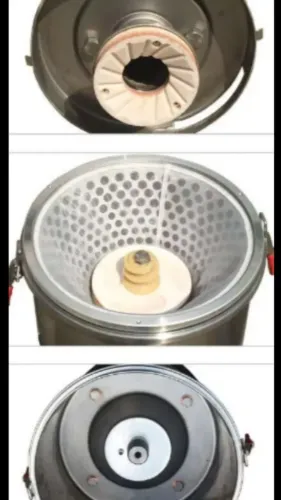
- Mechanical: shaft seal, bearings, couplings, screens, grinding stones or discs, fasteners, and the frame’s low points for trapped water.
- Product-contact: hopper, grinding chamber, screens, slurry outlet, gaskets, dead corners, and surfaces beneath covers where soy pulp dries.
| Symptom | Moisture clue | Inspect first |
|---|---|---|
| Motor trips or hums | Wet insulation, seized bearing, or water in terminals | Panel, cable glands, motor box, bearings |
| Uneven flow or blocked screen | Damp pulp or residue swelling around the screen | Chamber, screen, outlet, gaskets |
| Sour odour or froth | Retained slurry grew during humid shutdown | Seals, underside of screens, corners |
| Rust streaks or leaks | Water reached joints or remained beneath seals | Shaft seal, fasteners, frame drains |
A rainy-season cleaning and maintenance routine
Use a written soybean grinding machine maintenance rainy season routine, and never treat a wet floor as a minor housekeeping issue. Keep the grinder above standing water, clear roof leaks, and ensure floor drains discharge freely before production begins.
- Daily: Isolate power before cleaning. Remove soybean residue from the hopper, grinding chamber, screen, outlet and seals using the machine’s approved cleaning method. Drain trapped process water, wipe external surfaces dry, and leave product-contact parts open or disassembled for hygienic drying where the design permits.
- Weekly: Inspect cable glands, enclosure seals, shaft ends, bearing areas, belt guards and the underside of the frame. Look for rust, grease contamination, belt glazing, seal leakage, bearing noise, unusual heat, water accumulation and persistent odour. Check that ventilation or dehumidification actually reduces condensation rather than blowing damp dust at the panel.
- After heavy rain: Check the roof, walls, floor drains and machine supports before switching on. Inspect the electrical enclosure for droplets or condensation, and do not open or energise a wet panel. Record leaks, abnormal trips and rust so repeated faults receive repair rather than repeated wiping.
Restart only after all accessible surfaces and product-contact parts are dry, guards are fitted, drains are clear and no water has entered the electrical enclosure. If the panel became wet, have a qualified electrician inspect it before power is restored.
Run the grinder empty briefly, stop it, and check for abnormal noise, belt slip, leakage or motor trips before feeding soaked beans.
Specifications that matter when choosing a monsoon-ready grinder
Choose a grinder with documented moisture controls, not one described only as “stainless steel.” Stainless steel reduces rust, but chloride residue, trapped soybean solids and wet crevices can still cause pitting around welds, clamps and threaded joints.
| Specification | Verify before purchase | Moisture risk reduced |
|---|---|---|
| Construction | Product-contact stainless grade and finish; smooth welds; sealed shaft arrangement | Less corrosion, residue retention and seal leakage |
| Enclosure | IP rating with IEC 60529 test basis, cable-gland type and anti-condensation provision | Fewer rainwater and condensation faults |
| Drainage | Sloped contact surfaces, accessible drains, no liquid traps, and a raised frame | Less standing water beneath or inside the machine |
| Service | Bearing-seal arrangement, washdown limits, drying and restart procedure, and spare-parts access | Faster recovery after cleaning or water ingress |
Ask the supplier for the enclosure datasheet, wiring-panel photographs, drainage layout and written washdown limits. A high IP rating does not permit every cleaning method; forceful spray can drive water past seals, while a fully sealed panel can retain condensation and heat.
Before ordering, inspect a running unit or request a recorded demonstration. Confirm that product-contact parts can be removed for drying, cable glands grip the actual cable diameter, and the frame leaves room to clean beneath it.
Pushpanjali Industries can help you verify these points against the proposed grinder configuration rather than relying on a generic catalogue description.
Also ask how the machine behaves after an overnight shutdown: the procedure should identify isolation, panel inspection, drying time and restart checks. Choose a design with accessible bearings and belts; hidden components are harder to inspect when humid air, wet residue or seal leakage reaches them.
Related products
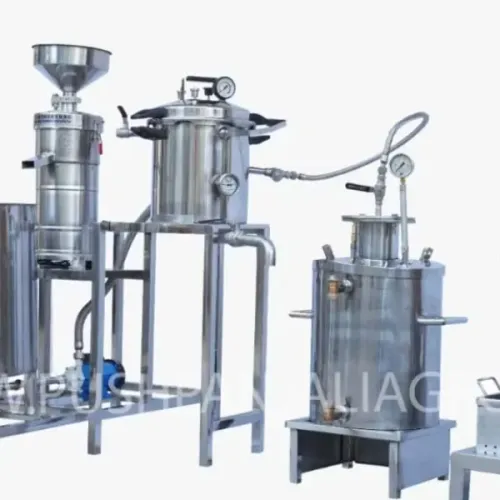
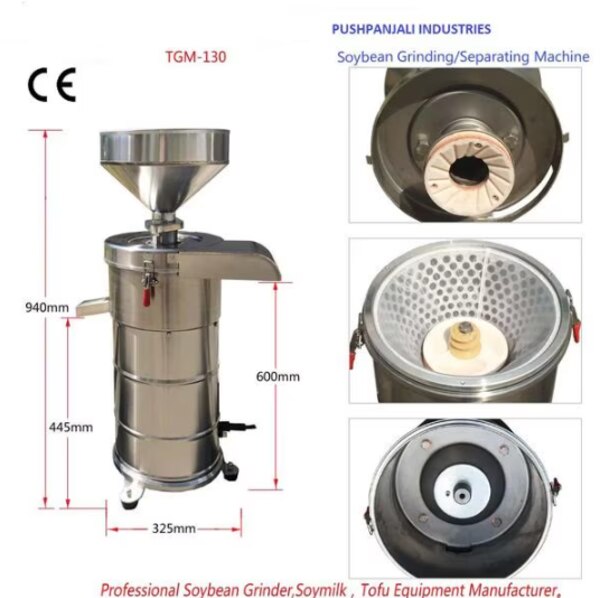
 | Soybeans grinder machine Soybean milk Machine TGM-130 Soybean Grinding and Separating Machine ₹64900 Application: Soybeans grinder machine. Suitable for make soy milk, Tofu etc. View product → |
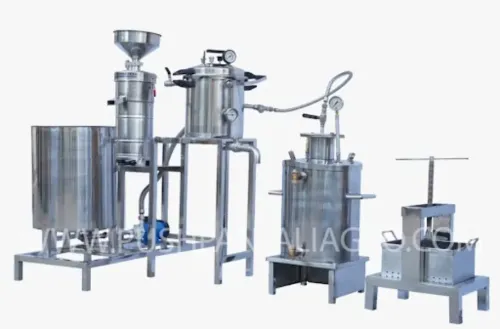
 | Soya Milk Plant 150 LPH (Upgradable Model) Automatic Soya Milk and Tofu (Soya Paneer) Making Plant. This commercial-grade system is designed to automate the extraction, sterilization, and... View product → |
Frequently asked questions
When does Ambala humidity become a soybean grinding machine fault?
Humidity becomes a fault when moist air condenses on surfaces below the dew point, especially cold stainless-steel, motor and electrical parts. Condensation can promote corrosion, insulation damage and microbial growth.
How do wet soybeans affect the grinding process?
Wet beans can bridge in the hopper, stick to screens, increase grinding resistance and overload the motor. They also make particle size less consistent and complicate cleaning.
Which parts should you inspect after rain exposure?
Inspect the motor terminal box, control panel seals, bearings, belts, couplings, hopper, screens, shaft seals and drainage points. Do not restart until electrical components are dry and safe.
What maintenance routine helps during the rainy season?
Remove residue, wash only where the machine design permits, drain water, dry product-contact surfaces, wipe exposed metal, check lubrication points and record unusual noise, heat or vibration.
Related products
 | SS Soya Milk Plant 180 LPH (Upgradable Model ₹240000 Soya Milk and Tofu (Soya Paneer) Making Plant, a multi-stage industrial food processing system designed to produce plant-based milk and solidified... View product → |
 | SS Soya Milk Plant 100 LPH (Auto-transfer) Upgradable ₹195000 Soya Milk and Tofu (Soya Paneer) Making Plant, a multi-stage industrial food processing system designed to produce plant-based milk and solidified... View product → |
 | SS Soya Milk Plant 100 LPH (Manual) Upgradable ₹165000 Soya Milk and Tofu (Soya Paneer) Making Plant. This is a semi-automatic industrial setup designed to process raw soybeans into milk and solidified... View product → |
 | SS Soya Milk Plant 250 LPH (Upgradable Model) ₹340000 Soya Milk and Tofu (Soya Paneer) Making Plant, a multi-stage industrial food processing system designed to produce plant-based milk and solidified... View product → |
Keywords