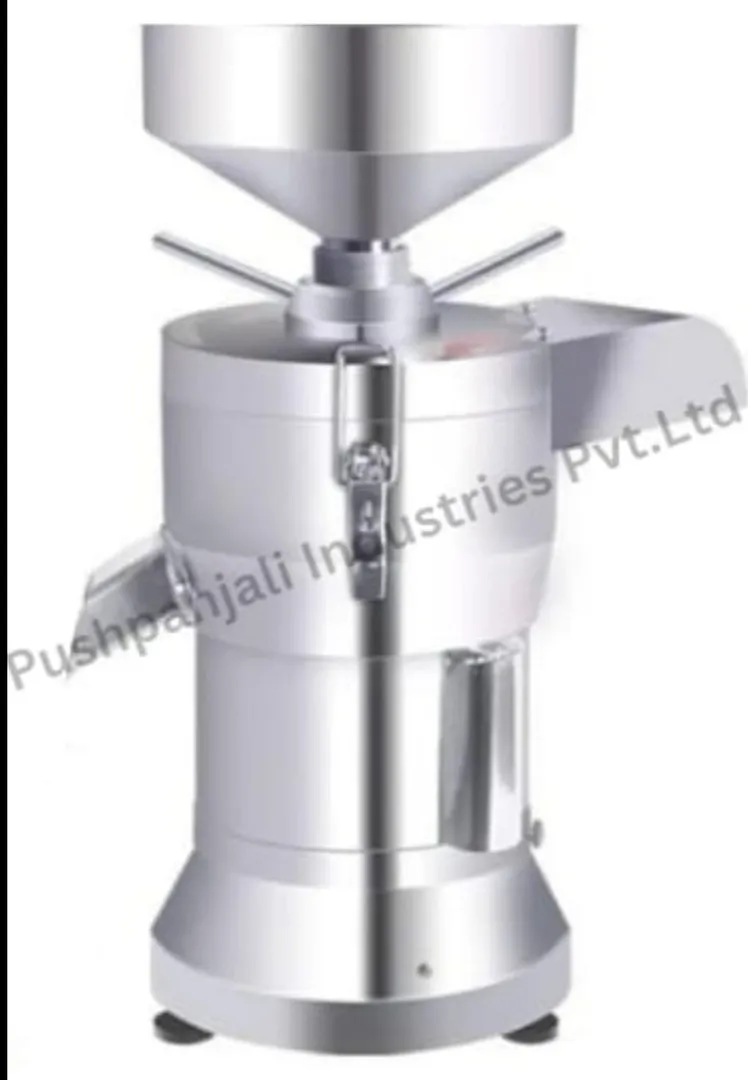
Grinding may appear to be a straightforward step in soya milk production, but its effect continues throughout the entire process. Inconsistent grinding can influence extraction, filtration time, residue characteristics and overall production flow.
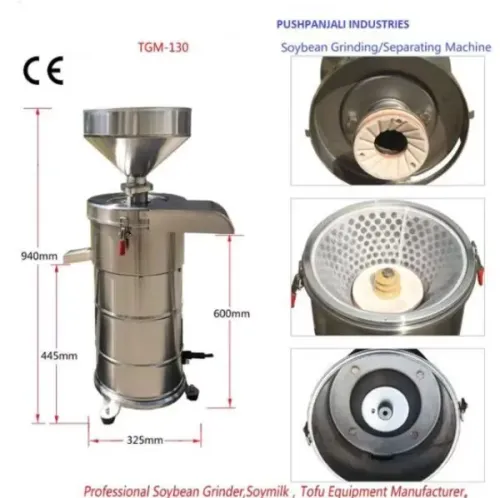
An Aluminum Soya Milk Grinder is designed to reduce soaked soybeans into a suitable slurry for subsequent milk extraction. For small food-processing businesses and soy-product manufacturers, understanding how the grinder fits into the complete line is more important than evaluating it only by motor power or purchase price.
What Does a Soya Milk Grinder Actually Do?
After cleaning and soaking, soybeans become softer and suitable for wet grinding. The grinder processes these beans with an appropriate quantity of water to create a slurry.
This slurry subsequently undergoes separation and further processing to produce soya milk.
The grinder therefore affects several operational factors:
- Uniformity of the slurry
- Ease of extraction
- Processing speed
- Amount and characteristics of residue
- Workload on downstream equipment
A grinder that cannot keep pace with the remaining equipment can slow the entire production cycle.
Why Consistency Is Important
Very coarse processing can leave soybean material insufficiently broken down, while unsuitable grinding can make filtration unnecessarily difficult.
Consistency is the practical goal.
Operators should also follow a standard soybean-to-water procedure for every batch. Changing the soaking condition or water quantity while blaming the grinder for changing results makes production problems harder to diagnose.
What Should Operators Check Before Grinding?
A simple pre-production routine can prevent many avoidable problems:
- Inspect soaked beans for foreign material.
- Confirm adequate soaking according to the established recipe.
- Check that the grinder is clean.
- Inspect moving components before starting.
- Use a consistent feed rate.
- Avoid overloading beyond the recommended capacity.
- Clean food-contact areas after production.
Regular inspection becomes particularly important in businesses operating several batches per day.
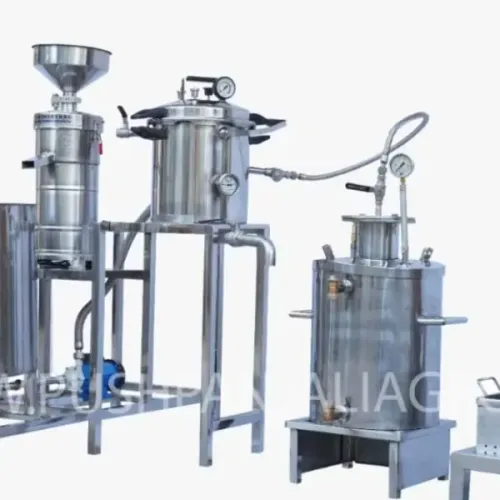
Grinder Capacity Should Match the Plant
A common mistake is buying individual machines independently without considering overall line capacity.
If the grinder processes material much faster than the extraction or heating section can handle, operators may create unnecessary waiting between stages. If it is undersized, downstream equipment may remain idle.
Businesses in Panchkula, Haryana, often supply food-processing equipment to customers throughout India, making the region relevant for entrepreneurs comparing machinery and complete soy-processing setups.
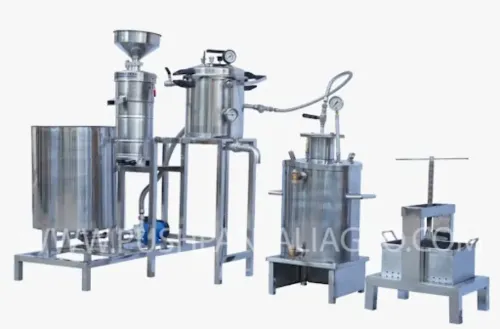
Pushpanjali Industries offers soy-processing equipment for businesses ranging from emerging enterprises to established food-production operations. When evaluating a grinder, buyers should discuss expected daily production rather than simply asking for the largest available model.
Good commercial production depends on how well individual machines work together. Selecting the grinder as part of an integrated process can create a smoother foundation for consistent soya milk manufacturing.
Keywords