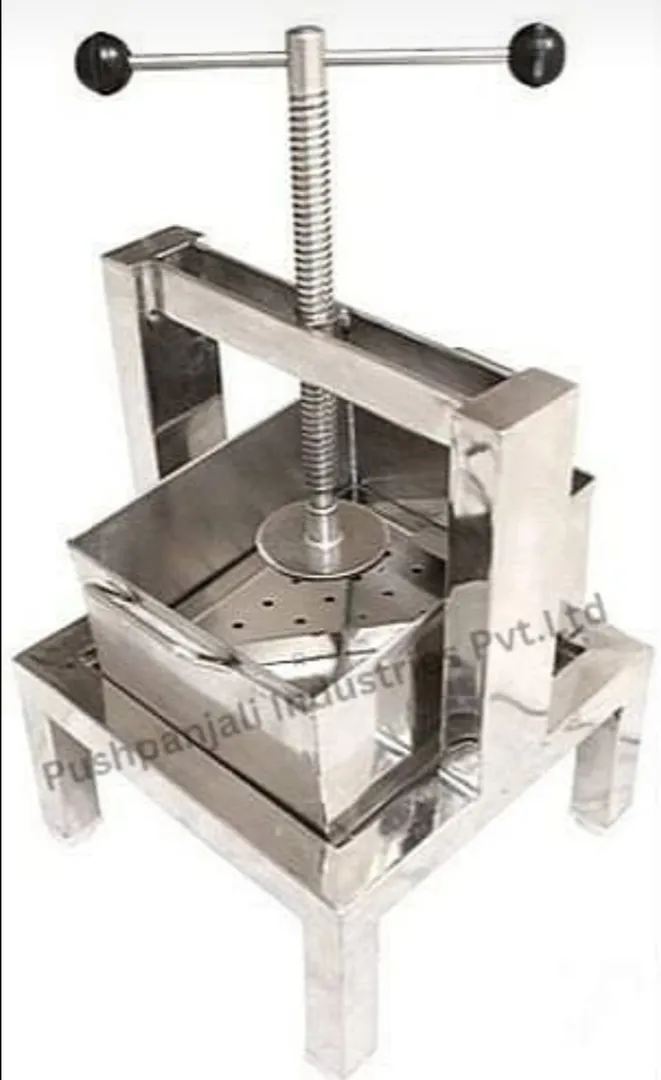
Large machines usually receive most of the attention when a tofu production line is planned. Yet comparatively simple processing equipment can have a noticeable influence on workflow and finished-product consistency.
A Tofu Strainer is one such component. It helps manage separation during tofu processing and supports an organised transition between coagulation and subsequent handling.
For emerging tofu businesses across India, understanding this stage can help improve production discipline without unnecessarily complicating the process.
Where Does Straining Fit Into Tofu Production?
Tofu begins with properly prepared soya milk. A suitable coagulant is introduced under controlled conditions, causing proteins to form curds.
The resulting mixture contains both curd and liquid. Separation then becomes necessary before further processing.
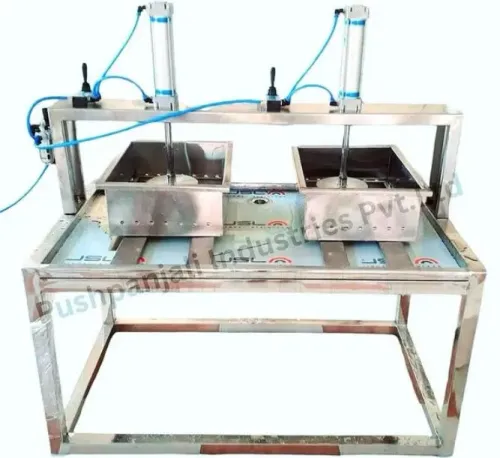
A straining arrangement helps retain the curd while allowing excess liquid to drain. Depending on the tofu variety and production method, the retained material may subsequently move to moulding or pressing.
Why Is Uniform Separation Useful?
When every batch is handled differently, finished tofu can vary.
One operator may drain a batch longer than another. Another may apply excessive manual pressure. Such inconsistencies can contribute to differences in moisture and texture.
Using an organised straining procedure makes it easier to establish repeatable production practices.
Good Straining Starts Earlier
The strainer cannot correct every upstream problem.
If soya milk preparation varies significantly between batches or coagulation is poorly controlled, the curd reaching the straining stage will also vary. Producers therefore need to consider the entire process:
Soybean preparation → grinding → extraction → heating → coagulation → separation → pressing or moulding → cooling → packaging
Each stage influences the next.
Cleaning Should Never Be an Afterthought
Strainers and cloths can retain small food particles. If residues remain after production, sanitation becomes more difficult.
An effective cleaning routine should cover the strainer, collection surfaces, containers and nearby food-contact equipment. Reusable filtering material should be cleaned, sanitised and dried according to the established hygiene procedure.
Match Equipment to Batch Volume
The appropriate straining arrangement depends partly on how much tofu is produced per batch.
Very small businesses may initially manage compact batches, whereas commercial manufacturers need equipment that keeps pace with their coagulation and pressing stages.
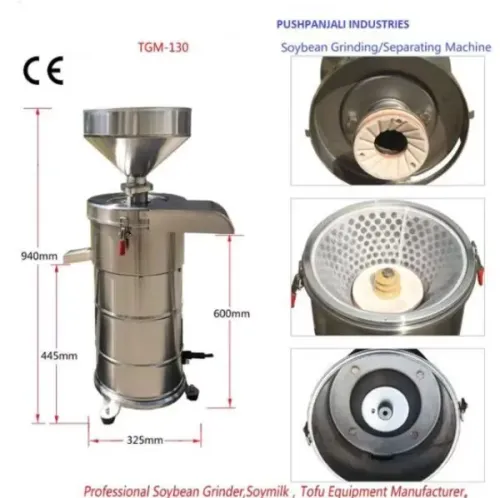
Panchkula in Haryana has an established base of food-processing equipment suppliers serving entrepreneurs in different parts of India. Pushpanjali Industries operates within this machinery segment and provides equipment associated with soy milk and tofu production.
Before increasing production, businesses should review even the smaller components of their workflow. A bottleneck does not always come from the largest machine. Efficient separation, clean handling and repeatable procedures can be equally important for dependable tofu manufacturing.
Keywords