Packaging affects far more than product appearance. It influences portion size, handling, distribution, equipment requirements and the way customers consume the finished beverage.
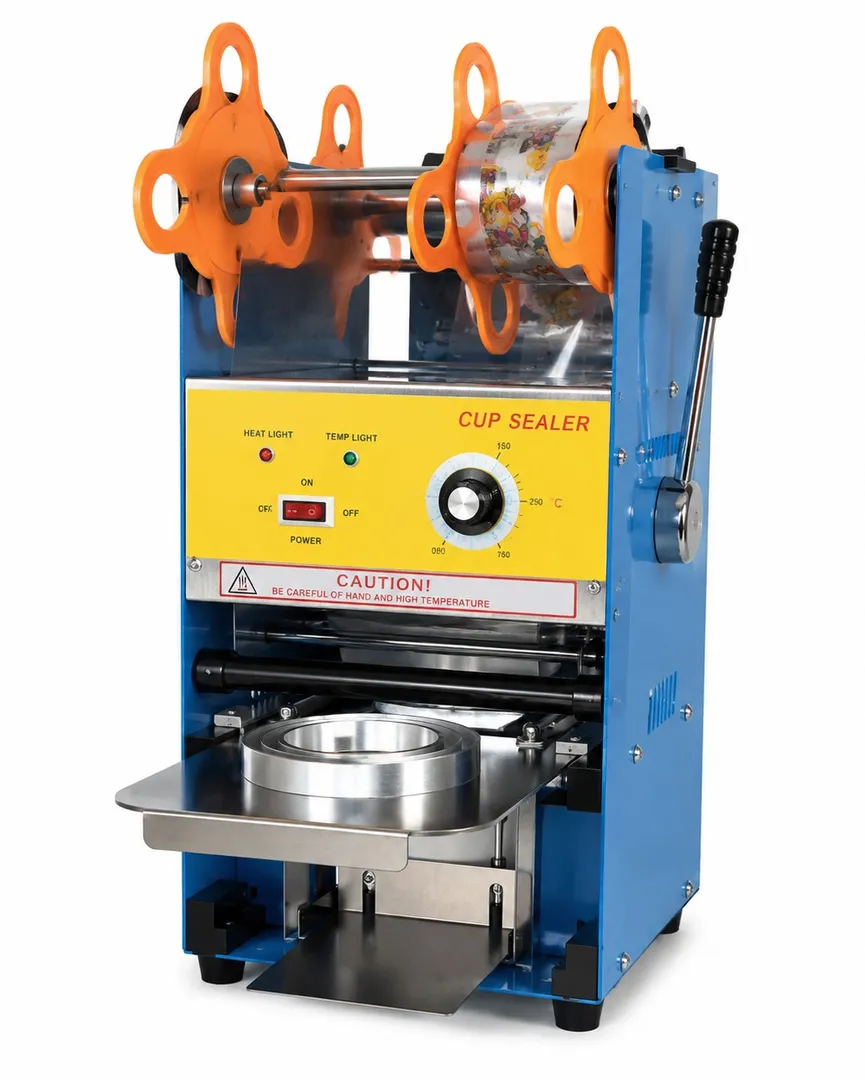
For a soy beverage business, deciding whether to use a Cup Sealer or a bottle-based filling format should therefore happen during production planning rather than after machinery has already been purchased.
Both formats can work well, but they serve different commercial requirements.
When Does Cup Packaging Make Sense?
Sealed cups can be practical for single-serving beverages intended for immediate or relatively short distribution cycles, subject to the validated product process and packaging system.
Typical applications may include:
- Cafeterias
- Institutional food service
- Local retail counters
- Events
- Canteens
- Fresh beverage outlets
A cup sealer applies an appropriate sealing film to the filled container. For commercial operation, the cup dimensions and sealing material need to be compatible with the machine.
When Are Bottles More Suitable?
Bottles may be preferred when brand presentation, transport handling, resealability or a different pack size is important.
The bottle itself is only one part of the system. A processor may also need filling, capping and appropriate container-treatment equipment depending on the production process.
Compare the Two Formats Practically
Before choosing, ask five questions.
How will customers consume the product?
Single servings may favour smaller packs, while household products may need larger containers.
How far will the product travel?
Distribution conditions affect packaging decisions.
What is the desired production speed?
Filling and sealing should keep pace with the milk-processing section.
How much packaging inventory can be stored?
Cups, films, bottles, caps and labels all require storage.
What validated shelf life is required?
Shelf life depends on the entire manufacturing, hygiene, thermal-processing, packaging and storage system, not merely the container.
Avoid Choosing Packaging on Appearance Alone
An attractive package is useful only if the operation can fill, seal, store and transport it efficiently.
Businesses should test container compatibility and sealing quality before committing to large quantities of packaging material.
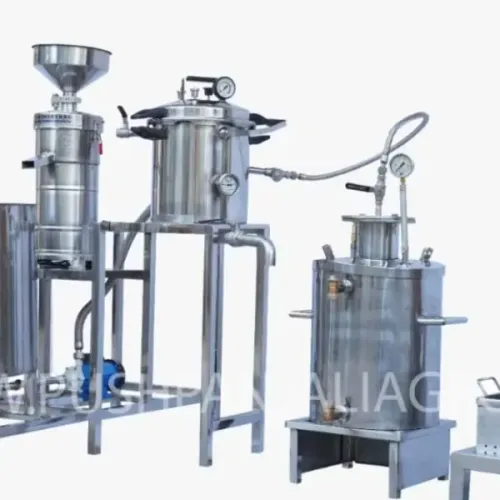
For manufacturers in India, equipment sourcing from established industrial regions such as Panchkula, Haryana, can provide access to both processing and packaging machinery. Pushpanjali Industries supplies machinery associated with soy-product manufacturing and related production requirements.
The best packaging format comes from working backwards from the customer, distribution channel and production volume. Once those factors are clear, deciding between cups and bottles becomes a practical business calculation rather than a guess.
Keywords