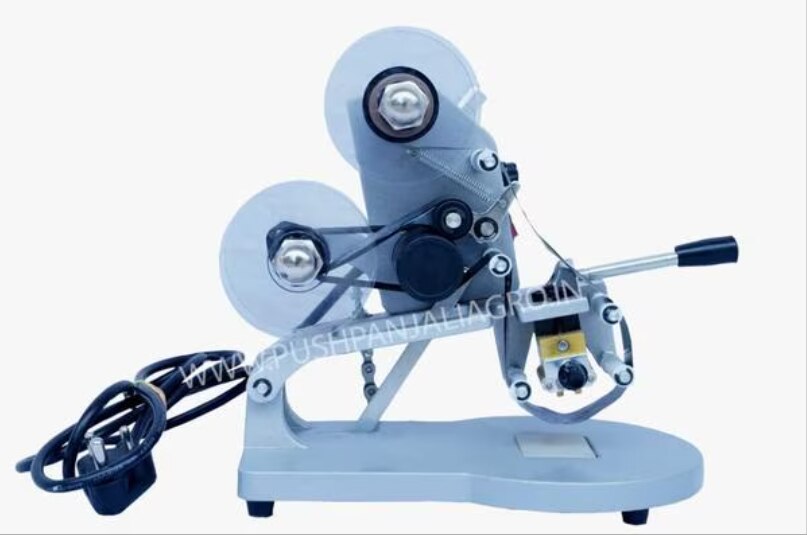
Dairy units lose time and traceability when pouch dates are faint, batch details vary by operator, or a code disappears after refrigeration. By the end, you will know which products and films an electric ribbon coder can handle, how to run and check it, and when inkjet, thermal-transfer or pre-printed packaging is a better choice.
Key takeaways
- Use heated ribbon coding to replace faint or mistyped hand-stamped dairy pack marks.
- Match ribbon, temperature and print placement to each film, pouch or coated label.
- Check batch format, date legibility, hygiene access and operator safety before purchase.
- Test every intended pack material at production speed before accepting the machine.
Which dairy packaging problems can a ribbon coder solve?
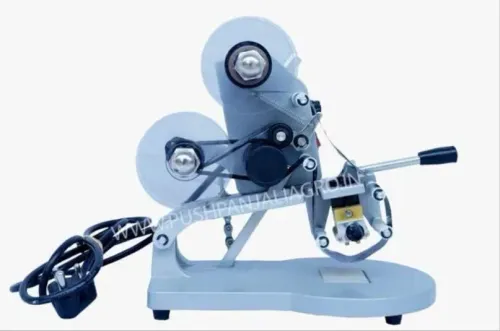
An electric ribbon coder fixes missing, faint, uneven or repeatedly mistyped identification on dairy packs. It replaces hand-stamping with a heated ribbon impression for batch number, packing date and use-by date. Suitable products include curd, paneer, milk, buttermilk and soya products packed in plastic pouches, laminated film, coated labels and compatible preformed packs.
| Packaging problem | What the coder fixes | What it cannot fix |
|---|---|---|
| Missing batch mark | Prints a repeatable batch or lot code | It cannot create production records |
| Illegible hand stamp | Produces clearer characters at a consistent position | Condensation, unsuitable film or poor settings can still cause fading |
| Date and batch inconsistency | Reduces errors from changing individual type characters | A wrong setting can repeat the same error on every pack |
| Rework from misplaced marks | Gives the operator a defined print position | It cannot correct a badly aligned sealing or packing machine |
For dairy business problems in Ambala, select a batch coding machine for dairy products only after a live trial on the actual pouch, film, label adhesive and sealing line. The printable surface must accept heat and ribbon transfer; a ribbon that works on paper can fail on a chilled pouch.
Coding alone does not verify that every impression is present or correct. Use written changeover approval for the product, dates, batch, ribbon and character arrangement, then inspect the first, middle and last packs. Choose a variable-data printer instead when every pack needs a unique serial number or dense QR code.
How do you code curd, paneer, milk and soya packs reliably?
Reliable coding starts with a trial on the exact pouch, label or laminated film used for curd, paneer, milk, buttermilk and soya products. A ribbon batch coder for food packaging needs a heat-compatible printable surface; a ribbon that works on a paper label can transfer weakly on a chilled polyethylene pouch.
- Match ribbon width to the print head and choose wax, wax-resin or resin after checking adhesion, rub resistance and legibility after refrigeration. Keep the printed layer outside the food-contact layer.
- Switch off the machine, fit the supply roll in the marked direction, thread the ribbon across the guides and wind it evenly onto the take-up core. Remove wrinkles before restarting.
- Set the heated print head within the machine’s specified range, then adjust temperature in small steps. Excess heat distorts film or burns ribbon; too little heat produces pale characters.
- Place the pack flat, present the print zone squarely to the head and set pressure just high enough for complete transfer. Excess pressure can crease a pouch or affect a seal.
- Print on actual packaging at production speed, then inspect the first pack for character height, spacing, position and missing strokes. Repeat after a ribbon change or material change.
| Material or surface | Starting ribbon choice | Approval check |
|---|---|---|
| Polyethylene or polypropylene film | Wax-resin or resin | Rub test after chilling and condensation |
| Laminated film | Ribbon matched to its outer coating | Confirm adhesion across the laminate |
| Coated label stock | Wax or wax-resin | Check contrast and label-surface transfer |
For an electric ribbon batch coder in Ambala, approve samples from the real sealing machine, not a dry workshop roll. Check the first, middle and last pack.
What code, placement and hygiene checks prevent repeated mistakes?
Prevent repeated mistakes by treating every run as a controlled changeover, not as a date-setting task. A batch coder for food businesses should print the manufacturing or packing date, use-by date, batch or lot number, MRP, and, where traceability requires it, shift and time.
1. Write the product name, batch or lot number, manufacturing or packing date, use-by date, MRP, shift, time, ribbon type and character arrangement on the changeover sheet. An operator and supervisor must sign it before production.
2. Remove the previous date and batch setting before loading the new one. Compare the physical characters with the approved sheet; one wrong setting can repeat across hundreds of packs.
3. Code after sealing and before secondary packing. Keep the impression away from the heat-seal area, pouch edge and gusset, where folds can hide characters or interfere with seal inspection.
4. Dry condensation from chilled film before printing. Moisture causes faint marks and smearing, while excessive ribbon heat can distort plastic film. Reject packs with blurred, reversed, incomplete or unreadable codes.
5. Keep the ribbon path, print head and surrounding work surface free from milk, curd, oil and powder. A contaminated ribbon transfers residue onto packs and weakens print clarity; replace it instead of wiping contamination into the film.
6. Approve the first pack against the changeover sheet, then check and record a pack from the middle and last of the batch. Inspectors should confirm code content, position, contrast and seal integrity. High-speed lines need camera verification and automatic rejection.
Is an electric ribbon coder practical for an Ambala dairy line?
An electric ribbon batch coder for dairy business problems in Ambala earns its place when you need fixed-format dates, batch numbers or shift marks on every pack.
It replaces inconsistent hand stamps, but it does not create traceability by itself: link the printed lot to production records and add camera inspection if a missing or wrong code would trigger costly rework.
| Option | Speed and changeover | Cleaning and consumables | Permanence and effort |
|---|---|---|---|
| Manual stamp | Slow; every date or batch change needs resetting | Minimal cleaning; ink pad or stamp wears out | Uneven pressure causes faint marks; highest operator effort |
| Electric ribbon coder | Faster repeat printing; change type and ribbon during a planned stop | Dry cleanup; ribbon is a consumable and waste rises at each change | Strong contrast after chilling when ribbon matches the film; moderate effort |
| Inkjet | Fast on moving packs; digital changes are quick | Requires ink, solvent and nozzle care; wet dairy areas increase cleaning work | Contactless print suits uneven surfaces, but condensation can affect adhesion |
| Thermal-transfer printer | Fast variable data and barcode changes | Film-specific ribbon and printhead maintenance | Durable, sharp codes with lower manual involvement |
| Pre-printed packaging | Fastest on the line | No coding consumable, but obsolete stock becomes waste | Permanent artwork; poor for changing dates or batches |
For a batch coder for food businesses, test the actual pouch, sealing machine, humidity, chilled storage and transport rubbing—not a dry sample roll. Pushpanjali Industries can run that trial around the film and changeover routine you actually use.
Choose inkjet or thermal transfer when packs need unique serials, dense QR codes, multi-line data or contactless printing.
Related product
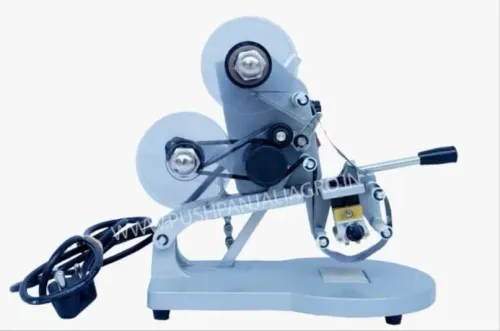
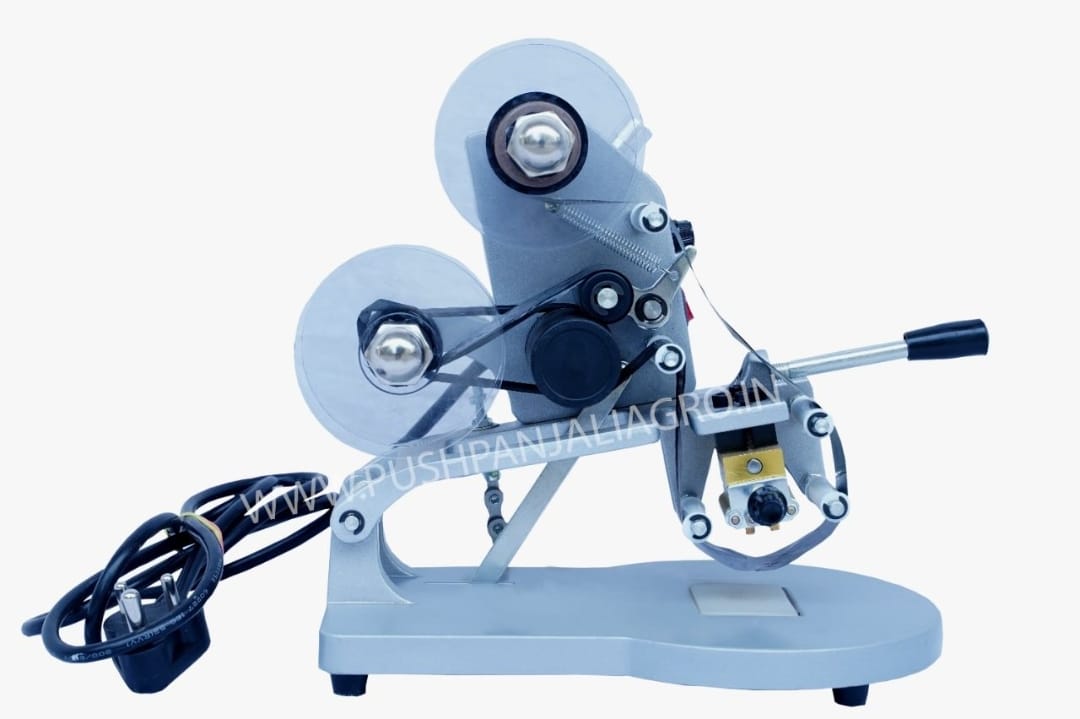 | Used For manually printing Date, Time, And Batch, or other Details on Pouch. View product → |
What should you test before buying and accepting the machine?
Accept the machine only after it passes your process, not a dry demonstration on a supplier’s sample roll. Use this checklist for an electric ribbon batch coder in Ambala:
1. Run live samples on the exact polyethylene, polypropylene, laminate, adhesive, coating and label stock used on your line. Test after filling and sealing, at production speed, with the actual sealing machine.
2. Store coded curd, paneer, milk, buttermilk or soya packs under your normal chilled conditions, then check contrast, adhesion, rubbing, condensation and smearing during handling and transport.
3. Confirm the smallest readable character size, available type arrangements and the adjustment range for print position, head pressure, temperature and pack thickness. Reject samples with clipped characters or uneven impressions.
4. Record the machine’s voltage, phase, wattage, plug type and earthing requirement. Have an electrician confirm that your line can supply them without unsafe adapters or voltage drops.
5. Test the hot-head guard, emergency stop, mains isolation, heat warning and access protection. A missing safety control is a rejection point, not an operator-training issue.
6. Ask for the exact ribbon grade, width and compatible substrates, plus local stock of ribbons, type sets, fuses, heaters and spare print heads. Compare waste at each ribbon changeover.
7. Get installation, operator training, warranty exclusions and response times in writing. For a ribbon batch coder for food packaging, confirm who will attend your Ambala site, within what time, and who pays travel and replacement-part costs.
8. During acceptance, approve the first, middle and last pack after a written changeover check covering product, batch, dates, ribbon and character arrangement. Keep signed samples with the machine record.
Frequently asked questions
Which dairy packaging problems can an electric ribbon coder solve?
It addresses missing, faint, uneven and repeatedly mistyped batch numbers, packing dates and use-by dates by replacing hand-stamping with a heated ribbon impression.
How do you code curd, paneer, milk and soya packs reliably?
Select a compatible ribbon, set the correct heat and pressure, keep the film clean and dry, and verify the mark on each intended pack material.
What checks prevent repeated coding mistakes?
Standardise the code format, confirm placement, inspect legibility at the start and during production, and keep coding surfaces clean and accessible.
What should you test before buying an electric ribbon coder?
Test every intended pouch, laminated film, coated label or preformed pack at line speed, then check print clarity, alignment, repeatability, changeover and cleaning access.
Keywords